About HempDash
Turning compliance from something you claim into something you can prove.
HempDash is evidence infrastructure for licensed hemp businesses — one place to organize, record, and retrieve the compliance documentation a business already generates. So the record exists before anyone asks for it.
01 — The context
Texas built something enormous.
Over the past several years, thousands of Texas entrepreneurs have built businesses in an industry that barely existed a decade ago.
They opened storefronts. They hired staff. They developed products, signed leases, learned a regulatory framework that was still being written, and put their savings behind it.
It has been an extraordinary ride. It has also been a roller coaster. The rules have moved, and they have moved more than once. Court decisions have shifted the landscape. Questions about enforcement have surfaced, and requirements that once seemed settled have come back under review.
And through all of it, operators still have businesses to run.
The problem isn't just paperwork.
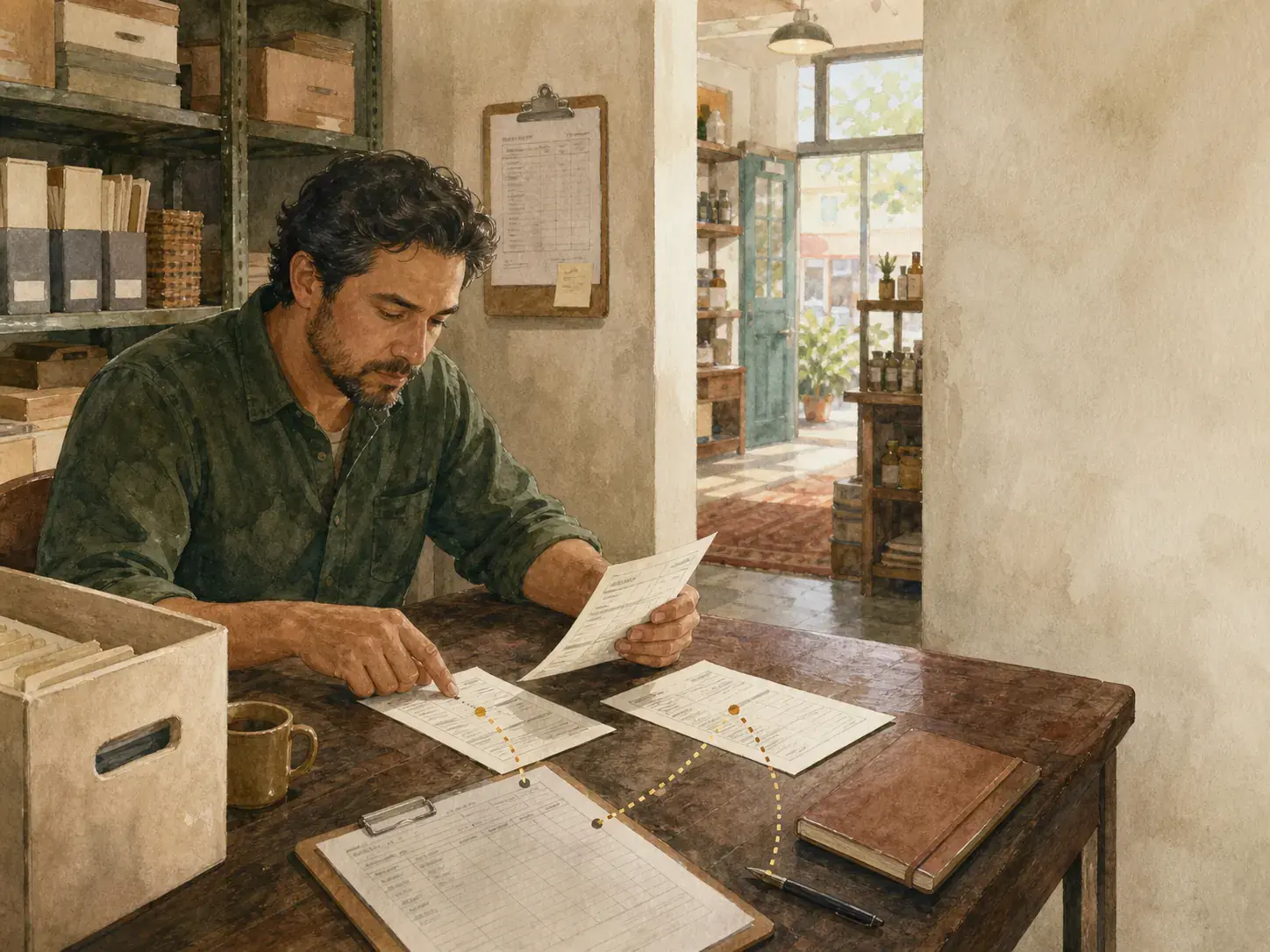
Being asked to substantiate something about your products, your suppliers, or your operations is a normal part of running a regulated business. It gets harder when the evidence that would answer the question is scattered.
- A shared drive
- PDFs named by whoever happened to save them.
- Email threads
- The certificate arrived as an attachment, and the thread has moved on.
- Spreadsheets
- Accurate as of whenever they were last updated.
- A point-of-sale system
- It knows what sold. It does not know which lot it came from.
- Someone's memory
- Dependable right up until the person who has it is unavailable.
Why we built HempDash
Across the Texas hemp market, operators are asked to connect things that arrive separately: a product, the lot it came from, the certificate of analysis that covers that lot, the day it was received, and the log entries that followed.
Generic document storage solves part of that. It gives every file a home. What it does not do is remember how the files relate — and the relationship is usually what the question is actually about.
Compliance records become more useful when the relationships between them are preserved.
So that is what we build toward: infrastructure that keeps day-to-day operational activity attached to the evidence that supports it, rather than leaving the two to be matched up later.
We can't steer the ship.
HempDash is not a law firm. It is not an advocacy group, it is not a testing lab, and it does not set or interpret Texas hemp policy.
Lawyers interpret.Advocates advocate.Regulators regulate.Operators operate.
Our responsibility is different: help preserve the operational record.
HempDash does not interpret the rules for you, and it does not tell you whether you are compliant. It keeps what you did, and makes it possible to find again.
You don't install lifeboats because you expect the ship to sink. You install them because some risks are too important to leave to chance.
Compliance infrastructure works the same way. You don't build the record because you expect to be questioned. You build it because the cost of not having it lands entirely on the day you need it.
We believe a business that can prove what it did is in a stronger position than one that can't.
What the record actually looks like
The idea is easier to see than to describe. Here is how a single lot ties a record set together: the product on the shelf, the lot it belongs to, the certificate of analysis covering that lot, the date it was received, and the retained record set that keeps them findable as a group.
Text version
- A product unit on the shelf carries a lot or batch number.
- The lot number groups every unit produced and tested together.
- One certificate of analysis reports the lab results for that lot.
- The date the lot was received is recorded alongside it.
- Those records are kept together as one retained record set.
- Because they are connected through the lot number, retrieving one record leads to the rest.
- This diagram shows how records relate to one another. It is an illustration, not a product screenshot, and it does not represent a compliance determination.
Live product specimen
Inspect the checker itself.
This is the same interactive specimen used on the COA checker page. It runs against a clearly marked sample document, so you can inspect the interface without uploading a customer record.
Educational specimen — a real check run on a specimen document.
Educational specimen — not a lab report
Certificate of Analysis (specimen)
Sample: flower · Matrix: plant material
Lot: TX-EDU-24-018
THCA: 0.21%
Δ9 THC: 0.08%
Expiration date: — (not stated in document)
No real laboratory, license, or report number is represented. Values exist so the checks below have something genuine to compute against.
No finding selected.
Select a numbered finding to see its full detail here — requirement, citation, effective date, evidence, and what would resolve it.
Organize. Record. Retrieve.
Three things, in the order they happen.
Organize.
Bring the records together.
Products, batches, and the certificates that cover them, in one place instead of five.
Record.
Build the evidence as you operate.
Compliance activity is logged with server timestamps as it happens.
Retrieve.
Find the record when it matters.
When a question comes up — an inspection, a recall, a vendor issue, an internal review — there is a structured place to start looking instead of a search across five systems.
Built to make the record visible.
A certificate of analysis shouldn't live as an isolated PDF. A product shouldn't be an unexplained row in a system. A record is only useful if someone can actually read it.
HempDash keeps the underlying documents — the certificate itself, its version history, the log entry — not just a status derived from them. Where records are connected, you can follow one to the next: from a product, to the lot it belongs to, to the documentation behind it.
See the record. Follow the evidence.
Don't wait until you need the record to build the record.
You built the business. HempDash helps you preserve the evidence of how you operate. Book a demo and we'll walk through how your records would be organized.